Verification of a bulk isopropyl alcohol manufacturing site begins with the recognition that a certificate of analysis, an ISO 9001:2015 certificate, and a loaded tank truck at a fenced terminal do not establish that the site converted propylene or acetone into isopropyl alcohol. In redistribution, purchased bulk alcohol is received into storage, possibly denatured or blended, then loaded into another tanker with a new lot number and a recertified CoA. The technical audit must therefore require evidence that connects reactor operations, distillation energy input, raw material consumption, catalyst management, and waste generation with the volume of material sold. Without that mass-balance linkage, the buyer is exposed to uncontrolled contamination, hidden blending of off-spec material, loss of regulatory traceability, and lot-level variability that cannot be corrected by downstream filtration.
The principal process routes for primary isopropyl alcohol production are direct hydration of propylene, indirect hydration via sulfuric acid esterification, and hydrogenation of acetone. Each route creates different mechanical equipment data footprints. Direct hydration units operate with a supported phosphoric acid catalyst, a high-pressure fixed-bed reactor, a recycle loop for unconverted propene, and a high-pressure separator. Indirect hydration units carry strong-acid material, require acid dilution and reconcentration, and generate corrosive vapor conditions. Acetone hydrogenation units consume gaseous hydrogen and use a hydrogenation catalyst such as copper chromite or supported nickel, with spent catalyst drums that are absent from a tank farm. The direction of the audit should be to collect and cross-check these hardware-specific records rather than to rely on the seller’s quality manual alone.
What Specific Reactor Conditions and Byproducts Are Verifiable Through Operating Records?
Direct hydration of propylene proceeds at temperatures in the range of 180 °C to 260 °C and pressures of 2.0 MPa to 7.0 MPa over a fixed bed of phosphoric acid on silica. The equilibrium-limited single-pass conversion is commonly 5 % to 10 %, which forces a large recycle stream and makes the recycle compressor a critical asset. The verified facility should be able to produce reactor pressure-drop trends, axial bed temperature scans, and compressor vibration maintenance records. In contrast, a terminal that only stores and blends material has no reactor bed pressure-drop data, no propene receipt records, and no high-pressure separator level control logs. The impurity profile of direct hydration typically includes diisopropyl ether, traces of propylene oligomers, and water. Bulk redistributors cannot demonstrate the origin of these process-derived impurities because they do not run the reaction.
Indirect hydration leaves an even heavier equipment footprint because the absorbent is strong sulfuric acid. Absorption of propene in sulfuric acid and subsequent hydrolysis produce isopropyl alcohol, water, and diisopropyl ether. The acid loop requires corrosion-resistant metallurgy, acid reconcentration, and sulfuric acid supply contracts. Acetone hydrogenation units operate at moderate pressures of 1.0 MPa to 4.0 MPa and temperatures of 70 °C to 150 °C over copper chromite or supported nickel catalysts. The audit should request hydrogen supply contracts, catalyst charge weights, catalyst reduction procedures, and spent catalyst disposal manifests. Stoichiometric mass-balance checking provides a defensible first screen: direct hydration of propylene yields 1.43 kg of isopropyl alcohol per kg of propylene at 100 % molar yield, while acetone hydrogenation yields 1.04 kg of isopropyl alcohol per kg of acetone. A facility claiming output beyond these ceilings without corresponding raw material receipts is either blending, importing, or misreporting.
Ordinary distillation cannot dry isopropyl alcohol beyond the atmospheric minimum-boiling azeotrope with water at 87.8 wt% isopropanol and a boiling point of 80.4 °C. To produce the 99.9 wt% grades required in pharmaceutical and electronic applications, the manufacturing site must operate a dehydration step such as molecular sieve adsorption, membrane pervaporation, or entrainer-assisted azeotropic distillation. A site that claims 99.9 wt% output but has no molecular sieve vessels, no pervaporation skids, and no entrainer recovery column fails the process-fluid reality check. In molecular sieve drying, water is adsorbed in a packed bed while isopropanol passes through; regeneration requires heated gas at 200 °C to 250 °C, and the regeneration loop should appear in utility records. Karl Fischer titration according to ASTM E203-16 should be performed on retained samples from the loading line, not only on laboratory bottles, because moisture pickup in bulk loading is a frequent failure mode.
Reactor, Distillation, and Molecular Sieve Evidence During a Site Walk
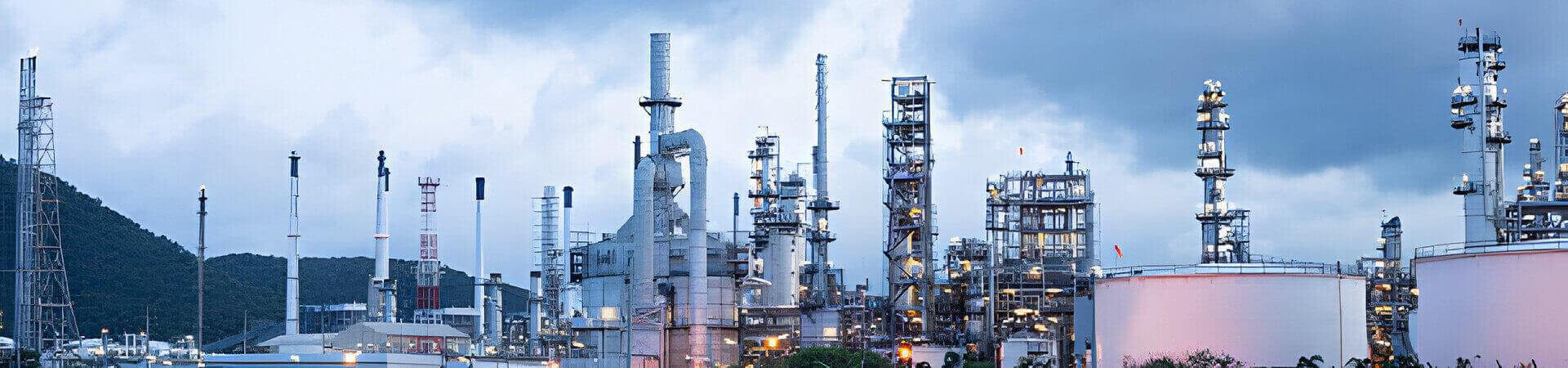
A credible site walk should identify the major vessels by tag number and connect them to the process flow diagram. Direct hydration reactors are typically vertical fixed-bed vessels with multiplate catalyst loading nozzles, radial temperature probes, and high-pressure flanges. Distillation trains for isopropanol-water separation include a series of columns with feed preheaters, reflux drums, and reboilers; the overhead vapor temperature should be logged against the azeotropic constraint and product specification. A site with only horizontal aboveground storage tanks and a small filter press is a redistribution terminal, not a manufacturing plant. The presence of a distributed control system with historical trends for column reflux ratio, reboiler steam flow, and product conductivity is another manufacturing indicator. Resellers may have blending software but rarely maintain distributed control system historian tags tied to continuous distillation.
Pressure vessel inspection records under API 510 or the Pressure Equipment Directive 2014/68/EU provide further confirmation. A producer will have inspection dossiers for reactors, separators, and columns with wall thickness measurements and nozzle orientation drawings. Storage terminals also have vessel records, but they lack the reactor-compatible metallurgy and high-temperature/high-pressure service descriptions. The auditor should compare the tag numbers on the vessels to the process flow diagram, not to a brochure.
If Only Storage and Drumming Licenses Are Presented, the Audit Must Reclassify the Supplier
Suppliers that hold only a solvent storage permit, a drumming line license, and an ISO 9001:2015 certificate for distribution should be reclassified as redistributors. This reclassification matters because redistributors can mix off-spec material, introduce water through tank breathing, and lose process-derived impurity traceability. A redistribution facility may purchase bulk isopropyl alcohol from multiple origins, consolidate it in a single tank, and issue a new CoA based on an external laboratory report. The resulting lot is not traceable to a single reactor or distillation campaign. The audit should request tank-to-tank transfer records, inlet and outlet weighbridge tickets, and the last cargo documentation for each receiving line. Unexplained gains in mass, frequent lot renumbering, or consistent use of the phrase “typical values” on CoAs are warning indicators.
Remote verification requires live video with geospatial metadata from the supplier’s control room, with the DCS screen showing real-time reactor inlet temperatures, separator pressure, and distillation column reflux. The video should pan from the screen to the vessel tag number without interruption. Recorded video can be edited or reused, so the auditor should require a live call in which the operator changes a display trend and reads a date-stamped value. For a primary manufacturer, the control room will have alarms tied to high pressure, low flow, and high column pressure differential. A storage terminal generally has only tank level and pump status screens. The auditor should also request a real-time unit operation ticket such as a shift log or electronic batch record that includes operator initials, raw material lot numbers, line clearing, and final product tank assignment.
USP and ASTM D770-11 Compliance Requires Direct Analytical Verification
Isopropyl alcohol used as a pharmaceutical excipient or as a processing solvent within a drug manufacturing operation is subject to the receiving and testing expectations of FDA 21 CFR 211.84. The supplier qualification must demonstrate that each lot is tested for identity, purity, and contamination before use. A transshipment terminal can use a contracted ISO/IEC 17025:2017 laboratory to test samples, but that does not provide process-specific knowledge of catalyst-derived impurities, water control, or packaging cleanliness. For compendial material, the USP monograph for isopropyl alcohol, the ACS Reagent Chemicals specification, and ASTM D770-11 define the minimum identity, assay, water, acidity, and nonvolatile residue requirements. The audit should inspect the actual raw analytical runs, not only a summary certificate, because lot-to-lot variation in water and acidity is the principal physical evidence of process control.
In drug synthesis, isopropyl alcohol is listed in ICH Q3C as a Class 3 residual solvent with a permitted daily exposure of 50 mg/day. Although this limit applies to the final drug product rather than the incoming solvent, it increases the analytical burden on the solvent supplier. A manufacturer that verifies assay by gas chromatography with flame ionisation detection, water by Karl Fischer titration using ASTM E203-16, and trace metals by inductively coupled plasma mass spectrometry has the analytical capability expected of a primary producer. A redistributor may issue a certificate with “conforms” but cannot produce the chromatographic integration files or the Karl Fischer drift curves. Batch-to-batch acidity excursions in redistributed material often arise from dissolved carbon dioxide or light ester formation during prolonged storage in unlined carbon steel. Primary manufacturers control acidity with neutralisation and overhead pH monitoring, while a redistributor can only retest and hope to dilute.
| Verification target | Primary manufacturing evidence | Redistribution or blending warning | Reference standard |
|---|---|---|---|
| Raw material mass balance | Propylene or acetone purchase orders, pipeline tickets, hydrogen supply logs tied to reactor campaign | Only bulk isopropanol receipts; no propylene, acetone, or hydrogen purchases | ISO 9001:2015 8.4.1, 8.5.2 |
| Reactor hardware | Fixed-bed reactor with catalyst changeout records, pressure-drop trends, high-pressure separator logs | No reactor, no catalyst disposal, no high-pressure vapour line | Pressure Equipment Directive 2014/68/EU, API 510 |
| Dehydration capability | Molecular sieve vessels or entrainer recovery column with regeneration logs | Claims 99.9 wt% output without dehydration equipment | ASTM E203-16 |
| Waste signature | Diisopropyl ether, spent catalyst, and heavy alcohol manifests | No byproduct disposal records | EU Waste Framework Directive 2008/98/EC |
| Analytical capability | On-site GC-FID, Karl Fischer, ICP-MS, and retained raw data | External laboratory only; repeated round-number CoA values | ISO/IEC 17025:2017, ASTM D770-11 |
| Safety and legal status | Seveso III storage or process report, hazardous installation permit, fire protection system | Storage-only permit with no chemical reaction authorisation | NFPA 30, 2012/18/EU |
For semiconductor-grade isopropyl alcohol, the verification threshold rises above standard industrial or pharmaceutical grades because water, trace metals, and submicrometre particles create immediate yield loss in front-end wafer processing. The supplier must demonstrate cleanroom filling, filtration through submicron-rated filters, and analytical capability for metals at µg/kg or lower levels by inductively coupled plasma mass spectrometry. Particle counting should be tied to an optical particle counter calibrated to recognise particles at 0.2 µm or smaller. Published data for specific SEMI grade limits for isopropyl alcohol is limited outside the standards documents themselves, so the audit should require the supplier to quote the exact SEMI specification and provide a retained certificate for the last three production lots. A redistributor that simply pumps bulk solvent through a filter cartridge at the loading rack is not operating a semiconductor-grade process.
Cosmetic and personal care applications require verification of purity, odor, and absence of contaminants that affect fragrance or skin compatibility. ISO 22716:2007 provides a guidance framework for cosmetic GMP, but it does not replace raw material supplier qualification. The audit should verify the manufacturing path from raw material to finished bulk, including odor panel results, peroxide values, and container compatibility. Isopropyl alcohol can promote iron pickup from unlined carbon steel; therefore, high-purity grades should be stored in stainless steel or lined vessels with nitrogen blanketing. A terminal that cannot demonstrate tank cleaning between cargoes and dedicated use for isopropyl alcohol presents a cross-contamination risk.
Bulk loading itself is a process step. The audit should verify that the loading line is dedicated or cleaned, that the carrier’s previous cargo is compatible, that the tank truck is dried, and that the bill of lading and seal number match the shipping document. The flash point of isopropyl alcohol is approximately 12 °C, and its lower flammable limit is approximately 2.0 % v/v, with an upper flammable limit near 12.7 % v/v. NFPA 30 governs the storage and handling of flammable and combustible liquids, and grounding and bonding procedures during loading should be documented. If a site maintains documented loading logs with temperature, pressure, and product density at the time of transfer, that is an additional manufacturing-grade control signal.


